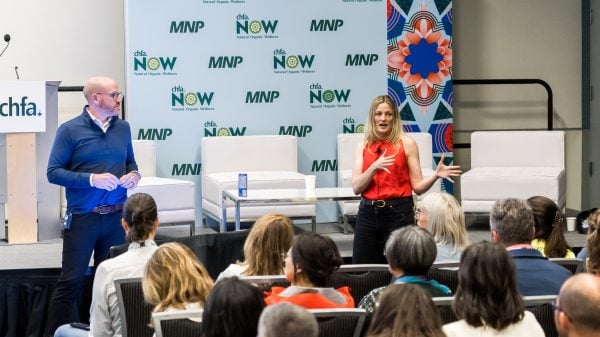


Canada’s declining fertility rate has sparked countless conversations about affordability, burnout, and the realities of modern life, but beneath the statistics is a lot of truth. Today, we sat down with Meaghan Kay, the Head of Marketing at myStoria, a Canadian reproductive health platform. As a former IVF patient and mother, she fills us in on all the trials and tribulations of navigating Canada’s healthcare system.
Canada’s fertility rate hit a record low of 1.25 children per woman in 2024, landing us squarely in the “ultra-low fertility” club. The headlines followed, along with the predictable hot takes: people aren’t having babies because of housing costs, childcare, avocado toast and existential dread. Most of that is true. The economic pressures on young Canadians building families are real and serious, and I’m not going to pretend otherwise.
But there’s a piece of this story that’s rarely discussed. And it’s the one that matters most to me, and to the millions of Canadians for whom the decision to have children isn’t about economics alone.

Photo provided by Meaghan Kay
Here’s what the data actually shows: the proportion of Canadians who intend to have biological children rose from 41% in 2021 to 46% in 2024. The largest jump was among teens and young adults aged 15 to 24, where intentions climbed from 53% to 64% in just three years. The desire for parenthood isn’t declining. It’s growing. We don’t have a motivation problem. We have a system problem.
Take fertility funding. Ontario just announced another $100 million for its fertility program, and wait times at some clinics have dropped dramatically as a result. That matters. But the program still excludes medications, approximately $5,000 per IVF cycle, and no government document will ever list the many real expenses: the gas from Sudbury, the hotel room in Toronto, the week of PTO that isn’t actually PTO because most people going through fertility treatment are quietly going through one of the hardest things of their lives and don’t tell their manager why they’re out-of-office. And Ontario is the good news story. Most provinces offer some form of funding with wildly different eligibility criteria, cycle limits, and age cutoffs. Alberta has no publicly funded program at all. PEI launched reimbursement in 2025, but there isn’t a single fertility clinic on the island, so they’ll fund the trip to access care that should be local. Let’s call it what it is: a workaround, not a solution.

Photo provided by Meaghan Kay
An estimated 1 in 6 Canadians of reproductive age face infertility, and that number doesn’t capture the millions more managing conditions like endometriosis, PCOS, or early perimenopause, often without a diagnosis. Access is only part of the problem. In myStoria’s survey of Canadian women, more than half said they described a reproductive health symptom to a doctor and were told it was normal, only to later find out it wasn’t. More than a third said it had happened more than once.
What makes it worse is what happens before women even get to that appointment. Nearly four in ten said they delayed or avoided seeking care because they weren’t sure their symptoms were “bad enough” to bring up. Almost one in three stayed away because they were afraid of not being taken seriously. The system isn’t just failing women when they show up, it’s training them not to.
When we asked women what single thing would have made the biggest difference in their reproductive health journey, the top two answers weren’t financial support or better clinic access. They were understanding their symptoms earlier (35%) and knowing what questions to ask their provider (29%). Nearly two-thirds said the gap was about information they should have had all along.
That’s the question the system has never actually asked: what does the patient need? Not the clinic, not the province, not the pharmaceutical companies. The person sitting with her phone at 11 pm, reading forums, trying to figure out what’s going on with her body.
Technology is starting to fill the gaps that policy left behind. Platforms built for the patient are giving people information, community and agency at a stage of life when the system has largely told them to just wait and see.
Canada’s fertility story is complicated. But part of it is simple: when people who want to build families can’t access the support they need to try, we don’t get to be surprised when they stop trying. The money is starting to catch up. The system hasn’t. It’s time to ask what happens when it does.
Meaghan Kay is Head of Marketing at myStoria, a Canadian reproductive health platform. She is a former IVF patient and mother.