

This National Wellness Month we’re reminded to slow down and make space for habits that help us feel our best. While wellness routines often focus on movement, and nutrition, today, we’re tuning into the muscles, fascia and tension we carry in our faces. That’s where Face Pilates™ comes in. Created by Registered Massage Therapist Thom Tullo, the Face Pilates™ System takes a performance-driven approach to facial wellness, combining manual therapy, lymphatic drainage, fascia release and targeted skincare to support healthier, more resilient skin. We sat down with Thom to learn how the method began, why facial tension matters and the simple habits that can help us rethink the way we care for our faces.
Share the story behind the Face Pilates™ System.
Face Pilates™ began from a simple realization: we dedicate so much time to training and recovering our bodies, yet we largely ignore the face—even though it’s made up of over 40 muscles, fascia, connective tissue, skin, and one of the body’s richest lymphatic networks.
As a Registered Massage Therapist (RMT), I was fascinated by how movement, circulation, and recovery could transform the body. In my treatments, I also began noticing a recurring concern among patients: tension and discomfort related to TMJ. Jaw clenching, grinding, headaches, and facial tightness were incredibly common, yet often overlooked or treated in isolation. Addressing TMJ became an important part of my work, and it opened my eyes to how deeply connected the face is to both physical tension and overall well-being.
I started asking why the same principles we apply to the body—movement, release, and recovery—weren’t being applied to the face in a more comprehensive way. The beauty industry was largely focused on covering, freezing, or correcting the signs of aging after they appeared, rather than supporting the tissues that create healthy skin in the first place.
That realization, combined with my experience treating TMJ and facial tension, led me to develop the Face Pilates™ — a method that combines manual therapy, facial muscle work, lymphatic drainage, fascia release, and recovery technologies with our performance-driven skincare: The REFORMER Collection. The goal isn’t to change how someone looks; it’s to help their skin and facial tissues function at their best so healthy, radiant skin becomes the natural result.
For me, Face Pilates™ has always been about shifting the conversation from anti-aging to aging well. When your tissues recover better, they perform better—and your face reflects that.

Photo provided by The Marconi Agency
How does the Face Pilates™ System combine treatment and skincare into one performance-driven approach to long-term skin health?
I’ve always believed skincare shouldn’t stop at the surface.
The Face Pilates™ treatment/massage treats the face much like we approach athletic performance: first, remove the barriers preventing optimal function, then create the environment that allows recovery and regeneration to happen.
Our in-person treatments improve circulation, encourage healthy lymphatic movement, release tension within the facial muscles and fascia, and restore mobility to the tissues. Once those barriers are reduced, the skin is better positioned to receive and utilize active ingredients.
That’s where our skincare comes in. Every formula is designed to support recovery using ingredients chosen for their ability to hydrate, strengthen the skin barrier, defend against environmental stress, and support healthy cellular function. We also incorporate performance-driven hero ingredients like NAD+, NMN, and creatine—an ingredient rarely seen in skincare—selected for their role in supporting cellular energy and resilience. Rather than viewing treatment and skincare as separate experiences, they work together—one prepares the tissue, the other continues supporting it long after the appointment ends.
The result is an approach focused on long-term skin performance rather than quick cosmetic fixes. Healthy skin isn’t created by one miracle ingredient; it’s built by consistently helping the skin function the way it was designed to.
What noticeable differences do you see in people’s physical and emotional bodies after in-person sessions?
The physical changes are often immediate. People notice brighter skin, reduced puffiness, softer facial tension, improved definition through the jaw and cheekbones, and a more rested appearance—not because we’ve forced those changes, but because we’ve helped the tissues function more efficiently.
What surprises me most, though, are the emotional changes. Many clients walk in carrying stress without realizing how much they’re holding in their faces. We clench our jaws, furrow our brows, tighten around the eyes, and brace our necks throughout the day. When those patterns are released, people often describe feeling lighter, calmer, or as though they’ve finally taken a deep breath.
I’ve had clients tell me they came for their skin but left feeling mentally reset. That isn’t accidental. The face is incredibly connected to our nervous system, and when we reduce tension and create space for recovery, we’re often supporting much more than appearance. You’re helping someone reconnect with themselves.
That’s what makes Face Pilates™ so rewarding. The glow people leave with isn’t just visible—it’s something they genuinely feel.
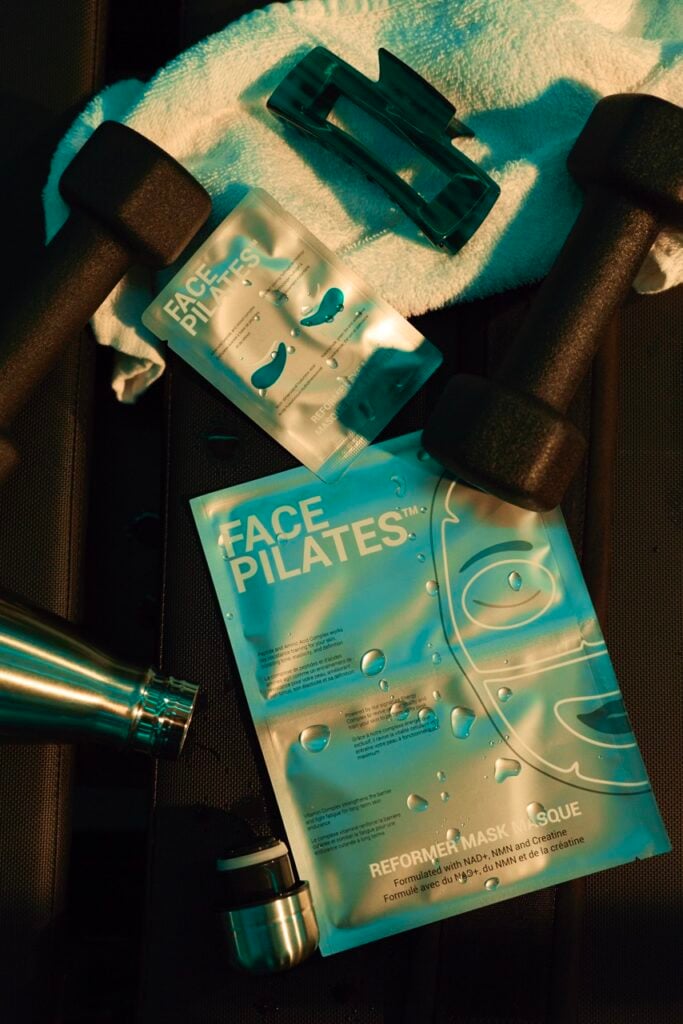
Photo provided by The Marconi Agency
If you could give everyone in the world one 60-second facial habit to do every morning, what would it be and why?
I’d tell everyone to spend 60 seconds opening the lymphatic pathways before reaching for any skincare.
Using clean hands, gently massage from just above the collarbones up the sides of the neck, then softly glide from the centre of the face outward toward the ears. The pressure should be incredibly light—you’re encouraging lymphatic movement, not working the muscles.
Your lymphatic system doesn’t have its own pump; it relies on movement. After a night’s sleep, fluid can naturally accumulate in the face, contributing to puffiness and heaviness. Taking one minute to encourage that fluid to move helps reduce congestion while creating a better environment for circulation and skincare to do their job.
It’s a small habit, but it’s one of the simplest ways to help your face look more awake while supporting your body’s natural recovery processes.
Have you ever looked at someone’s face and immediately known what habits or stress they’re carrying? What product of yours would you recommend to them?
Absolutely—but probably not in the way people think.
I’m not looking at someone’s wrinkles or trying to guess their age. I’m looking at patterns. Is there chronic tension through the jaw? Puffiness suggesting fluid isn’t moving efficiently? Tightness around the eyes from long hours in front of a screen? Forehead tension that hints at stress? The face tells a story about how we’ve been living.
Of course, no one sign tells you everything, and everyone’s face is unique, but over time, you begin to recognize recurring patterns.
If I had to recommend one product, it would be our Face Pilates™ Reformer Face Mask. I often describe it as recovery for your skin. It delivers deep hydration and supports the skin barrier while ingredients like ectoin, NAD+, NMN, creatine, and antioxidants help the skin recover from daily environmental stress. It’s designed to complement the work we do in treatment, but it’s just as valuable at home after travel, long workdays, poor sleep, or any period when your skin feels depleted.
Ultimately, though, no product can replace healthy habits. Our philosophy has always been that great skincare works best when it’s supporting healthy, well-functioning tissue—not trying to compensate for it.
Where can we find you?
Instagram: @thom.tullo & @facepilates
website: face-pilates.com
In person: located at AMAN Spa. Toronto
amanspa.ca