
“On ne voit bien qu’avec le coeur. L’essentiel est invisible pour les yeux.”
This was always one of my favourite lines from The Little Prince by Antoine de Saint-Exupéry. You may be wondering what this has to do with gemstones. But lately, I have been thinking about that quote a lot. The fox tells the little prince that you can only see clearly with the heart, because what is essential is invisible to the eye. In the book, it is a lesson about love. I have started to think of it as a lesson about value.
The Little Prince has been one of my favourite books since childhood, right alongside The Alchemist by Paulo Coelho. Maybe because both stories ask the same question in different ways: what happens when you learn to see beyond what everyone else sees? One taught me that what is essential is invisible to the eye. The other taught me that treasure is not always what the world tells you to search for. Both, in their own way, are about learning how to recognize value.
Which brings me to moissanite.
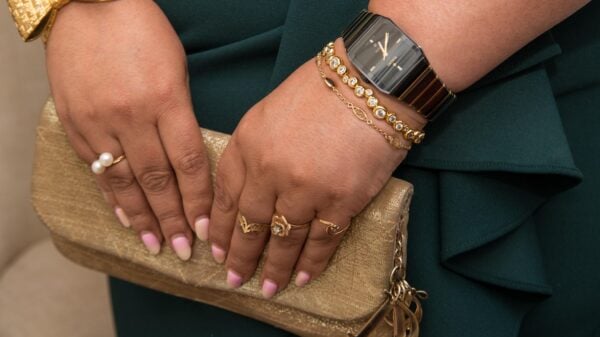
A gemstone I had been noticing more and more on the wrists and fingers of tastemakers I trust, often dismissed as a diamond alternative, but one with its own story, its own brilliance, and, as I would soon learn, its own cosmic origin.
Moissanite was first discovered inside a meteorite. And when I learned that, something lit up inside me. Here was a stone with a space story. A stone that felt like hidden treasure, not because the industry told us it was valuable, but because you had to know enough to see it. Except, and this is the part that makes it even more interesting, the moissanite we wear today does not come from space.
Natural moissanite, the silicon carbide crystals French chemist Henri Moissan discovered in the Canyon Diablo meteor crater in Arizona in 1893, exists in quantities so microscopic that it has never been practical for jewellery. The traces found in meteorites simply cannot be cut into wearable gemstones.
What we are wearing today is lab-grown. Created using the same molecular blueprint. Produced without traditional mining, without conflict, and without the century-long mythology the diamond industry built around the idea that anything else was settling.
And right now, if you are paying attention to where fine jewellery is actually going, moissanite may be the most interesting stone in the room. Meteorite origin story included.
We Have Been Here Before
A few years ago, lab-grown diamonds were the disruptors. Chemically identical to mined diamonds, a fraction of the price, and carrying none of the ethical baggage of the traditional supply chain, they seemed, for a moment, like the obvious future.
And they did become mainstream. Walk into almost any jewellery retailer today and lab-grown diamonds are no longer a niche offering. They are part of the default conversation for anyone who wants a diamond without the guilt or the sticker shock.
Which is exactly why the conversation has moved on.
The people who were early to lab-grown diamonds are now looking for something else. The jewellery landscape is shifting toward transparency, sustainability, and the quiet confidence of knowing what you are actually buying. Moissanite is not lab-grown diamond’s scrappier cousin. It is its own gemstone, and some might say a more interesting one. It scores around 9.25 on the Mohs hardness scale, making it one of the hardest gemstones used in jewellery, second only to diamond. It has more fire than a diamond, that rainbow dispersion of light that makes people reach for your hand in direct sunlight. It is lab-grown, more attainable, and does not need the same old diamond mythology to make it feel meaningful.
It has often been dismissed as a “fake diamond.” That stigma should never have existed. The point, actually, is that it is not a diamond. It is moissanite. Its own gemstone, with its own story, its own fire, and its own reason for being.
The Brand Doing the Rebranding
Enter Justin and Louis De Bernardi. They launched el&elle in December 2023 and their origin story is, fittingly, a love story.
They were looking for engagement jewellery, walked into the traditional spaces, and found an industry that had made its peace with opacity and markup. They did not feel reflected in what they saw. They did not feel especially seen. And they did not understand why so much of the experience felt more transactional than emotional.
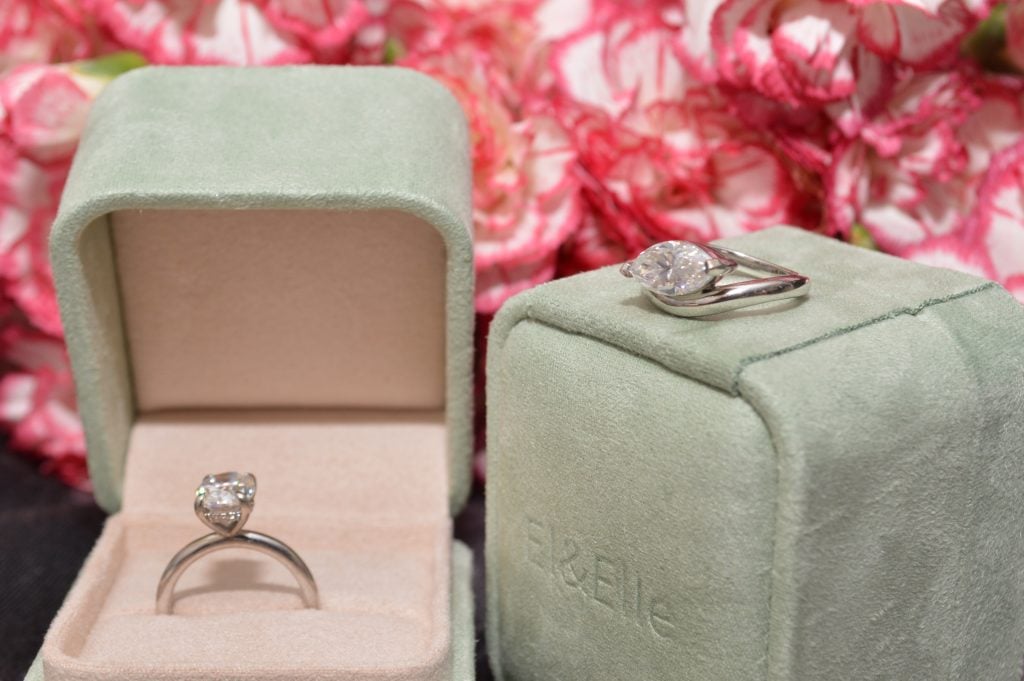
Photo credit: Zahra Hemraj
“You often just see ‘metal’ listed,” Justin told me. “We wanted to build a brand committed to transparency. You know exactly what you’re getting.”
There was also the matter of sparkle. Louis found men’s jewellery narrow, muted, and, in his words, sometimes bland. The sparkle was missing, and that absence said something. Not just about men’s jewellery, but about who the industry has decided is allowed to want shine. el&elle is not interested in that kind of restriction. A ring is a ring. A stone is a stone. Shine does not need a gender.
Louis grew up in Mexico surrounded by jewellery through his mother, grandmother, sisters, aunts, and cousins. For him, jewellery was emotional before it was ceremonial. It was not only about status or occasion. It was about memory, beauty, connection, and the way a piece could make someone feel special the moment they put it on. That feeling sits underneath the brand.
Justin and Louis spent two years researching before going to market. Moissanite kept presenting itself as the answer: durable, brilliant, ethical, attainable. The industry had been selling it as a consolation prize. They saw something else.
“We saw an opportunity for people to realize it can be a choice,” Justin said, “not a compromise.”
That reframe is el&elle’s entire thesis, and it shows up in how they price things. A two-carat marquise solitaire, the kind of ring that anchors a bridal display case and gets held up as the aspiration, can still run around $1,500 in the moissanite market. At el&elle, Justin told me, the comparable piece is $250. Similar stone, similar materials, same visual impact on your finger.
“People should be asking why,” he said.
Why does one moissanite ring cost six times more than another? What are you actually paying for: the stone, the metal, the craftsmanship, or the markup? That is the question el&elle wants people to ask. And once you start asking it, the old pricing logic becomes harder to unsee.
Even colour becomes part of that transparency. el&elle offers coloured moissanite, including green and black, but they are careful to explain how that colour is created. Some coloured moissanite is grown that way. Other colours, like pink, are often coated. It is the kind of detail most shoppers would never know to ask about, which is exactly why el&elle wants to talk about it.
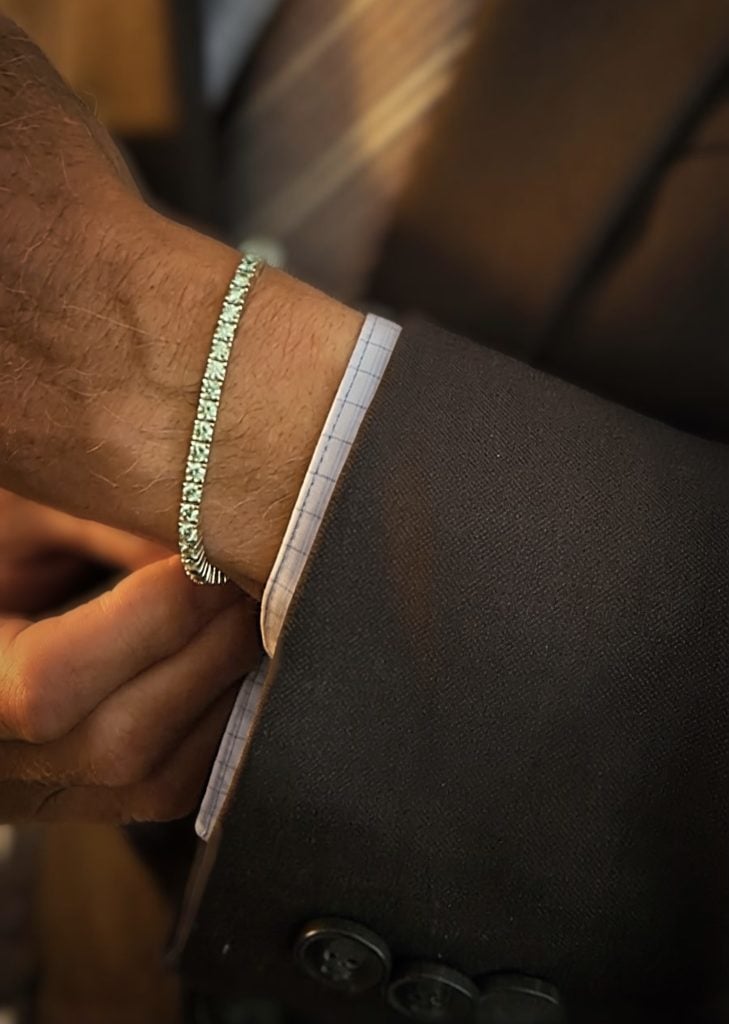
Photo credit: Zahra Hemraj
A green moissanite tennis bracelet may look like a styling choice, and it is. But it also says something about the brand’s larger philosophy: colour is not just colour. Materials matter. Process matters. Knowing what you are buying matters.
“We run the shop the way we like to shop,” Louis said.
That may be the simplest explanation of the brand: transparent, specific, emotional, and unwilling to make the customer feel foolish for asking what something is made of. The brand is made-to-order. Nothing sits in a warehouse waiting to be marked down at the end of a season. You want it, they make it. It is a simple idea that somehow feels radical in an industry built on excess.
The community they have built around that idea is something else entirely. Justin and Louis started by going live on TikTok, not to sell anything, but to talk. About stones, about markups, about the questions nobody in a traditional jewellery store wants you to ask. People found them and kept coming back. When el&elle held a pop-up, someone in their community drove twelve hours to be there. I find that more interesting than any press placement, because you cannot manufacture that. You can only earn it.
Their ambition is not to build a trend brand. It is to build a legacy one. Louis told me he sees el&elle outliving them, which is a bold thing to say about a brand that launched in December 2023, but less bold when you understand how intentionally they are building. They make decisions with a ten-year lens. Every piece is worn and tested before it goes to market. They are already working on designs for 2027 and 2028. Their whole process is designed to avoid trend-chasing and fast-fashion logic, favouring pieces that feel measured, intentional, and built to last.
The Pieces
The design language is wearability, not occasion.
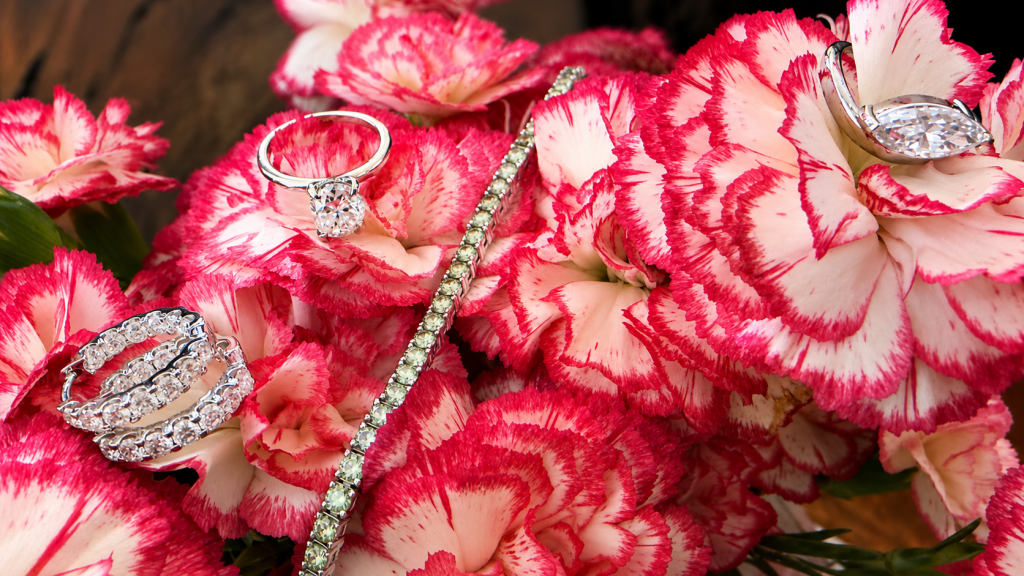
Photo credit: Zahra Hemraj
Louis remembers jewellery as something women in his family wore daily, not something saved for somewhere special to go. That philosophy shows up in pieces built to move with you, not sit quietly in a box waiting for permission. The brand’s stretch tennis bracelet uses elastic metal links rather than the traditional silicone, a years-in-the-making technical detail that sounds minor until you hear the story behind it. Justin told me they received an email from a daughter whose mother, who has arthritis, could finally wear a tennis bracelet again because of the design.
That is where design stops being clever and becomes generous.
Their Ouroboros ring is the piece I keep coming back to. A coil design set with a six-carat pear moissanite, it was inspired by a snake that kept appearing in the garden of Louis’s mother’s home. He spent months sketching it, always returning to the image of the snake’s head. It began as a bangle concept, became a ring, and may still become both.
Louis’s style icon, for the record, is María Félix, the Mexican golden-era film actress whose jewellery collection was as much armour as adornment. You can see it in his work. The pieces are not shy. They are not asking to be liked quietly.
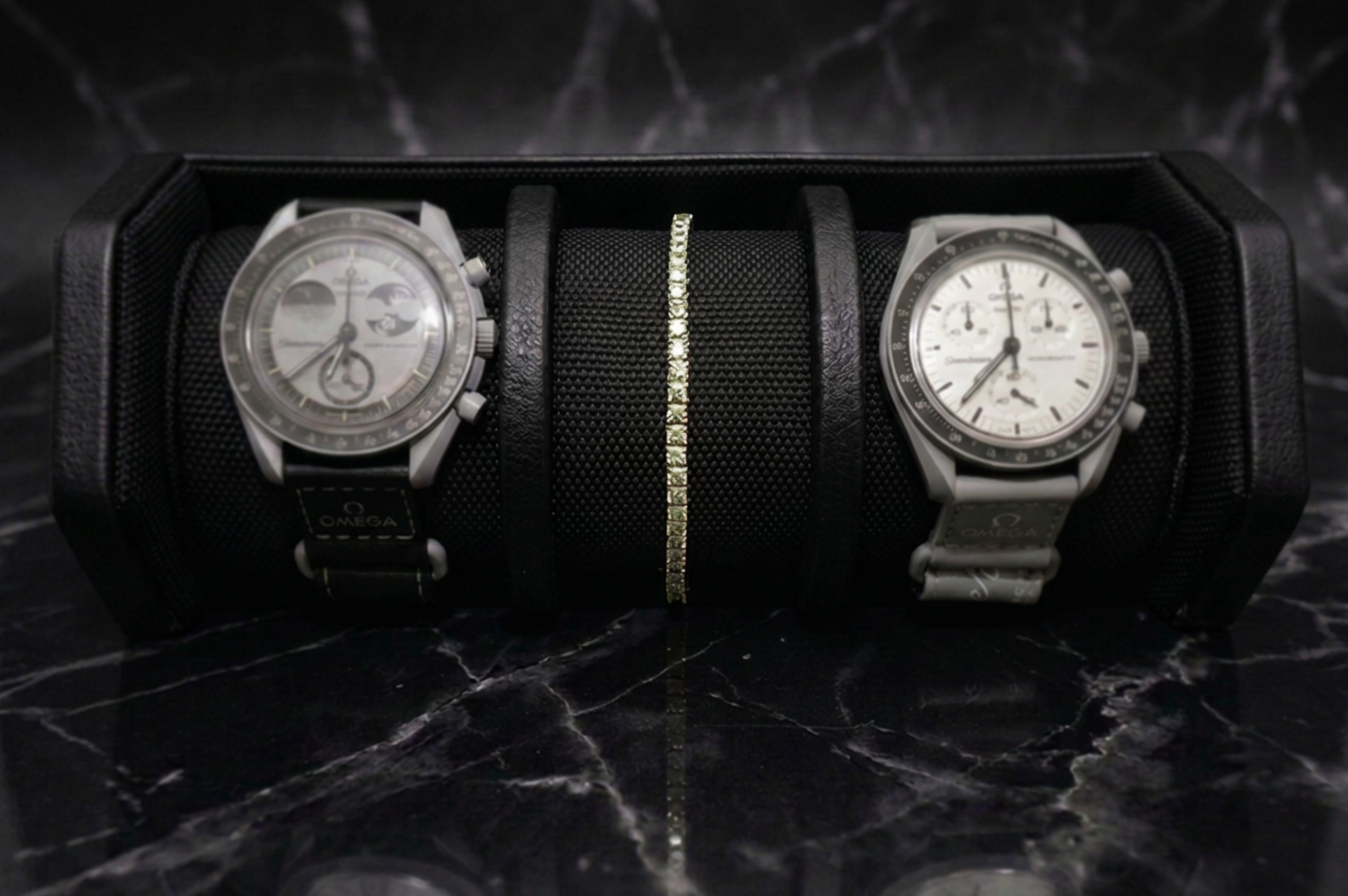
The bangle, meanwhile, sits exactly where my own eye tends to go as someone who writes about wrist stacks: beside a fine timepiece. It does not feel like filler. It has the presence to hold its own.
Which brings me back to where I started.
I wanted to own a piece of space as a child. It turns out the version worth wearing was grown in a lab, sold transparently, and costs less than you think.
Both books taught me the same thing, in the end: learn to recognize what was meaningful all along. Maybe that is what makes moissanite feel so right for this moment. It asks you to look again. Not at what the industry told you mattered, but at what actually does.
The fox was right. What is essential is invisible to the eye.
Follow along for more jewellery, watch & stacking inspo on IG at @torontowatchgirl